
Amnion Banking
A natural source of healing and protection designed to support your baby’s long-term health and well-being.
The amnion is a unique part of the placenta that contains powerful natural substances to support healing and cell repair. By preserving it after birth, families can keep this resource safe for potential medical use in the future.
What is the Amnion?
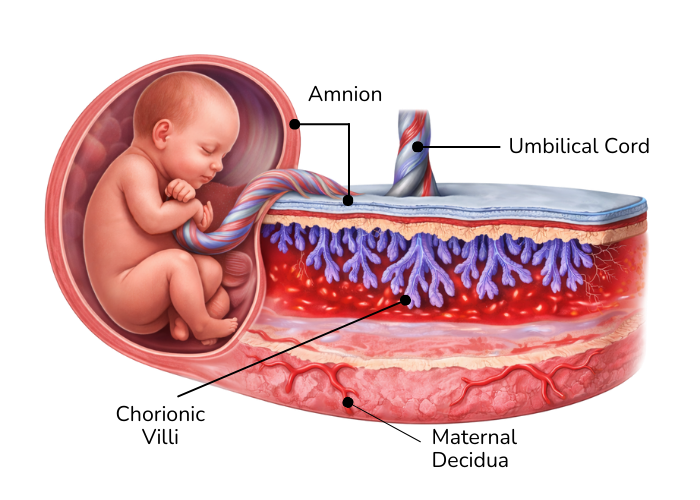
The amnion, also known as amniotic membrane, is the innermost layer of the placenta. During early pregnancy, it starts as a protective covering around the umbilical cord and later develops into a thin lining inside the placenta sac.
This delicate layer is rich in:
Collagen, fibronectin, and hyaluronic acid
Growth factors and anti-inflammatory proteins
Antimicrobial properties
Why Store the Amnion?
Unlike other cells, the amnion is non-immunogenic, which means it does not trigger rejection and can often be used safely between family members—parents, siblings, and sometimes even more distant relatives.
By choosing to store the amnion, you’re preserving a natural resource that has been trusted in medicine for over 100 years—one that may help not only your baby, but also parents, siblings, and other family members.
For over a century, doctors have used amnion in medicine:
How Amnion Has Been Used in Medicine

Healing Eyes
Since the 1990s, doctors have used amnion in eye care. It helps calm inflammation, reduces pain, and supports recovery in conditions affecting the surface of the eye.[7]

Wounds and Ulcers
Amnion has been shown to encourage the body’s natural repair process by helping new skin cells grow. In one study, wounds treated with amnion healed 92% within six weeks, compared to just 8% with standard care.[8]

Burn Treatment
Doctors have turned to amnion for burn care for more than a century. Beyond covering and protecting injured skin, it also reduces scarring and speeds up recovery.[9]

Supporting the Lungs
Amnion cells have been given to premature babies with bronchopulmonary dysplasia, a serious lung condition. Results show that the treatment was safe and well-tolerated.[10]
What Researchers Are Exploring Now

Diabetes
Early studies suggest amnion-derived cells may help people with diabetes better regulate their blood sugar.[11]

Dry Eye Syndrome
In a group of 90 patients with severe dry eye, 88% experienced improvement after treatment with amnion.[12]

Heart and Blood Vessels
Researchers are testing whether patches of the amniotic membrane can help reduce inflammation and repair tissues in cardiovascular conditions.[13]

3D Bioprinting
Looking further ahead, scientists are experimenting with using amnion stem cells to “print” replacement tissues, including muscle, bone, and even ear structures.[14]

Brain Injury
Researchers are investigating whether amnion cells can support recovery after brain injuries by reducing inflammation and promoting the repair of damaged tissues.[15]
amnion Banking FAQs
Who in the family can benefit from stored amnion?
Because amnion is non-immunogenic, it can often be used not just for your baby, but also for parents, siblings, and in some cases even more distant relatives. This makes it a valuable resource for the whole family.
How is the amnion collected?
Collection is simple, safe, and painless. After your baby is born and the placenta is delivered, the amnion can be carefully separated and prepared for long-term storage. This process does not interfere with your birth plan or your bonding time with your newborn.
Ready to Learn More? Start with our Free Info Pack
Our free info pack walks you through everything — what are newborn stem cells, how private stem cell banking works, why it matters, and which options are best for your family. It’s a helpful starting point for parents exploring cord blood banking.