
Placenta Banking
Give your baby the gift of more health options, today and in the future, by storing the placenta at birth.
Placenta banking offers a proactive approach to safeguarding your family’s health by preserving the regenerative power of your placenta. This non-invasive process allows you to store vital tissues that have demonstrated remarkable healing properties and are actively being explored in clinical trials worldwide.
What is Placenta Banking?
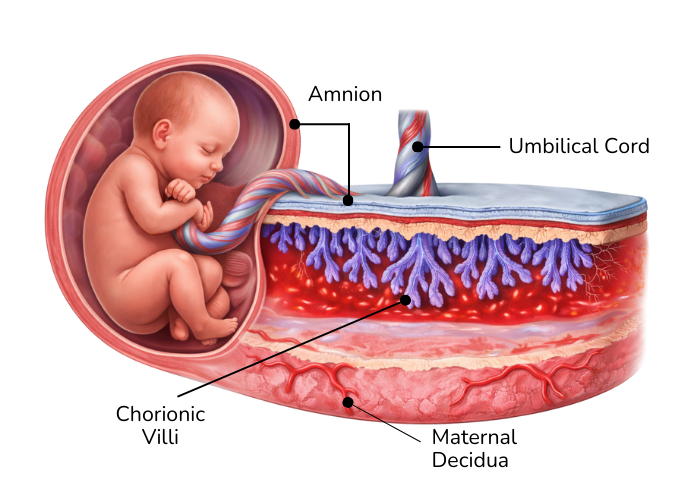
Placenta banking involves the collection and storage of placental cells which contain unique regenerative cells with distinct therapeutic applications.
At Cells BioScience, we offer storage of the Maternal Decidua, Chorionic Villi, and Amnion.
By opting for our comprehensive placenta banking services, you ensure access to a diverse range of regenerative therapies that can support your family’s health throughout their lives.
What is Maternal Decidua?
The maternal decidua is the layer of the placenta that develops from the mother’s uterus during pregnancy. It is the maternal side of the placenta, where your body connects with your baby’s lifeline. This tissue is especially rich in stem cells and immune cells that are different from those found in cord blood or cord tissue.
After your baby is born, the maternal side of the placenta is usually discarded—but it can instead be collected, processed, and preserved for your family.
Studies show that stem cells derived from the maternal decidua exhibit remarkable therapeutic potential for:





What is Chorionic Villi?
Chorionic villi are tiny, tree-like branches growing from the chorion (the outer membrane that surrounds the amniotic sac). These villi extend into your uterus and are in close contact with your blood supply, helping your baby get oxygen, nutrients, and many important biological signals as it grows.
The chorionic villi are rich in regenerative stem and stromal cells — cells that can grow, heal, and help repair tissues. By choosing Chorionic Villi Storage, you preserve these cells now so they may support your child’s health later.
Clinical Research & Promising Results




By storing both the Maternal Placenta and Chorionic Villi, you preserve a truly unique collection of regenerative cells collected at birth. This simple step ensures that a valuable part of your baby’s biological legacy is protected, giving you peace of mind knowing you have taken proactive steps to preserve options for their wellbeing.
Placenta Banking FAQs
Why should I consider storing cells from both the maternal placenta and chorionic villi?
Storing both types gives you a wider variety of regenerative cells, collected safely at birth, which may provide valuable options for your child as they grow.
Does collecting these cells affect my delivery or my baby?
No. The collection happens after birth and does not interfere with the delivery process or your baby’s safety in any way.
Who can benefit from these stored cells?
The cells are reserved for your family’s personal use, giving your child—and sometimes immediate family members—access to a unique biological resource if ever needed.
Ready to Learn More? Start with our Free Info Pack
Our free info pack walks you through everything — what are newborn stem cells, how private stem cell banking works, why it matters, and which options are best for your family. It’s a helpful starting point for parents exploring cord blood banking.