
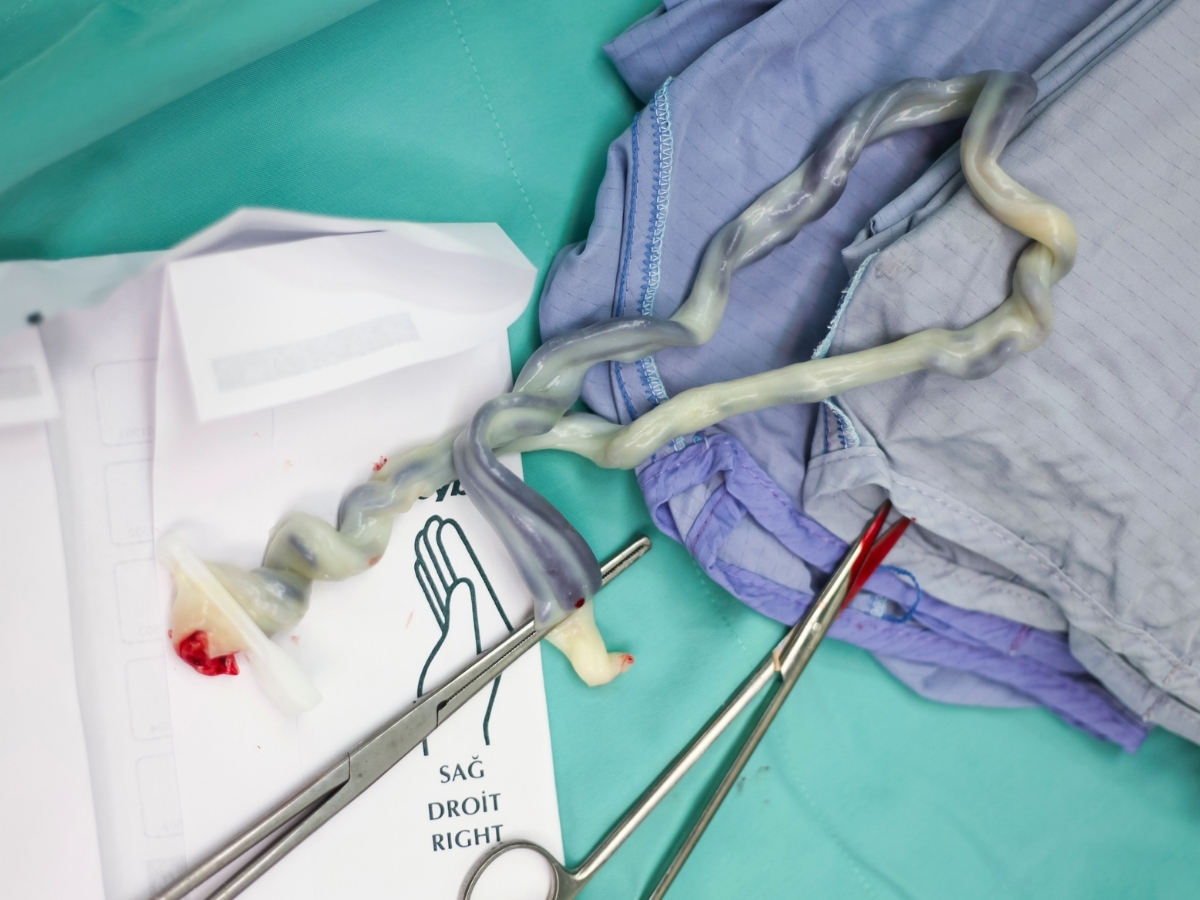
Can you still collect your baby’s cord blood if you choose to delay cord clamping?
This is one of the most common concerns expectant parents have when considering cord blood banking. Many assume they must choose one or the other—either prioritize immediate cord clamping or preserve stem cells for future use. In reality, with proper coordination and clinical technique, delayed cord clamping and cord blood collection can be done together in most cases.
What is Delayed Cord Clamping?
Delayed cord clamping (DCC) refers to the practice of waiting before clamping and cutting the umbilical cord after birth, rather than doing so immediately. In many cases, the cord is allowed to continue pulsating for a short period of time, supporting a natural transfer of blood from the placenta to the newborn.
The World Health Organization (WHO) generally recommends delaying cord clamping for approximately 1 to 3 minutes, although in some birth settings it may continue until cord pulsation stops or until the placenta is delivered.
This practice is increasingly adopted because it allows additional blood—rich in oxygen and nutrients—to transfer to the baby during the final moments of birth transition.
Does Delayed Cord Clamping Reduce Cord Blood Collection?
A common misconception is that delaying cord clamping will make cord blood banking impossible. However, the amount of blood needed for storage is only about 50 ml, while the total blood in the placenta and umbilical cord is approximately 200 ml.
Research has shown that a 1-minute delay in clamping can transfer about 80 ml of blood to the baby, leaving more than 100 ml available for cord blood collection.
If clamping is delayed for up to 3 minutes, about 100 ml of blood may be transferred to the baby, with enough remaining for cord blood banking.
Benefits of Delayed Cord Clamping
Delayed cord clamping offers immediate, evidence-supported benefits for newborns, including:
- Improved early iron stores, which may support healthy development in infancy
- Increased blood volume at birth
- Better circulation during the newborn transition phase
- Potential support for hemoglobin levels in early life
Benefits of Cord Blood Banking
Cord blood banking focuses on long-term medical potential. Cord blood contains valuable stem cells, including hematopoietic stem cells (HSCs), which are used in regenerative and transplant medicine.
To date, cord blood stem cells have been used in treatments for more than 80 medical conditions, including certain blood disorders and immune-related diseases. In many cases, they can serve as an alternative to bone marrow transplants.
The key advantage is that these cells are only available at birth, making collection a one-time opportunity.
Learn more about Cord Blood Banking
So, Can You Do Both?
Yes—delayed cord clamping and cord blood banking are not mutually exclusive in most births.
The outcome depends on several factors, including:
- The timing of cord clamping
- The baby’s condition at birth
- The efficiency of the collection process
- The experience of the attending medical team
With proper antenatal planning and communication with your healthcare provider, both approaches can often be successfully achieved without compromising newborn care or stem cell collection quality.
CellAdvance: Premium Cord Blood Banking
Cord blood banking success is not only about timing at birth—it also depends heavily on how the sample is processed, preserved, and stored after collection.
Our premium service, CellAdvance is FDA-approved and designed to support high-quality cord blood and cord tissue banking through an integrated approach to collection, processing, and cryopreservation. The system is built around maintaining cell integrity from the moment of collection through long-term storage.
Key advantages associated with CellAdvance include:
Higher Stem Cell Recovery
Preserves the highest number of CD34+ cells post-thaw and strong Colony Forming Units (CFUs) recovery compared with other processing methods.
Faster Engraftment
Median neutrophil recovery occurs around 14–15 days, which is faster than standard methods (approximately 21 days), supporting quicker hematologic recovery.
Lower Red Blood Cell Contamination
Removes up to 99% of red blood cells, producing a cleaner sample with minimal RBC carryover, which is important for transplant quality and storage efficiency.
Consistent Across Volumes
Cell recovery remains stable regardless of starting cord blood volume, ensuring reliable processing outcomes across different collection sizes.
Choosing delayed cord clamping does not have to mean giving up the option of cord blood banking. With proper planning, coordination, and a skilled medical team, both can often be achieved effectively.
The most important step is to discuss your preferences early with your doctor and cord blood banking provider so that a clear plan can be in place before delivery.
Both decisions—supporting your baby’s immediate transition and preserving stem cells for the future—can work together when carefully managed.